In an era of fluid alliances and rapid change, understanding geopolitical risk is vital for leaders, investors and citizens. This article explores its dimensions and offers practical guidance to navigate 2025’s turbulent landscape.
At its core, geopolitical risk describes threats from international tensions that disrupt politics, economies and societies. It encompasses the possibility of wars, terrorism, sanctions and other crises that derail normal relations and commerce.
Experts break it down into several categories:
To quantify these threats, analysts rely on robust measurement frameworks.
By tracking sanctions lists, protest frequencies, tariff announcements and cyber incidents, these tools provide rigorous insight into emerging dangers.
The global order has fragmented into a “G-Zero” world without clear leadership. States adopt fluid multi-aligned strategies, hedging between major powers rather than committing to lasting alliances. With nearly 59 active conflicts—the highest since World War II—uncertainty reigns.
Leaders in the WEF’s Global Risks Report rank geopolitical tensions and state-based armed conflict among their top concerns for the next two years. They also highlight how these risks intertwine with misinformation, cyber warfare and extreme weather events, creating a matrix of vulnerability.
Economically, the lingering Russia–Ukraine war and the Israel–Hamas conflict continue to push up energy and food prices, fueling inflation and market volatility. Trade disruptions force companies to rethink sourcing strategies, driving onshoring and friend-shoring trends.
Additionally, a global elections super-cycle adds policy unpredictability. Frequent leadership changes feed regulatory shifts and heightened policy uncertainty, challenging businesses to maintain stable long-term plans.
Key hot spots illustrate the diversity of threats:
Great-power competition between the United States and China risks an unmanaged decoupling of trade and technology. Policies on export controls and tariffs reshape critical-minerals supply chains and semiconductors, forcing regions to choose sides.
In Europe, the Russia–Ukraine conflict still unsettles energy security and grain exports. Russia’s continued cyber operations and hybrid tactics threaten infrastructure and disinformation campaigns across NATO member states.
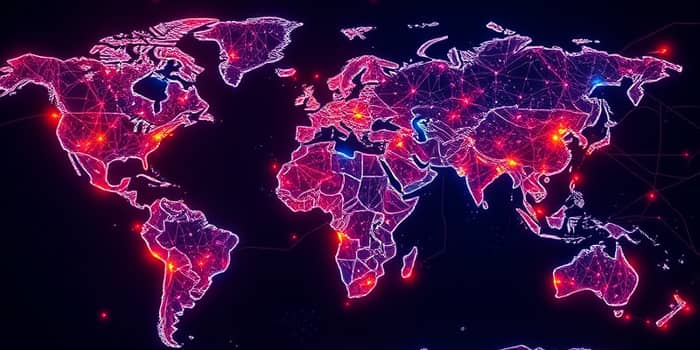
The Middle East remains volatile as internal unrest in Iran stokes proxy conflicts and global oil chokepoints. Meanwhile, gray-zone confrontations in the South China Sea and strategic ambiguity over Taiwan keep the Asia-Pacific on edge.
Cyber warfare and information operations have surged, targeting energy grids, pipelines and elections. Misinformation campaigns exploit societal divisions, undermining trust in institutions and fueling polarization.
Climate change intensifies these tensions. Extreme weather disrupts shipping routes and damages critical infrastructure, while resource scarcity sparks competition over water, arable land and rare earth elements.
Geopolitical risk exerts influence through multiple channels:
These dynamics can combine to create feedback loops. For instance, higher energy prices boost production costs, increasing social unrest and amplifying political risk, which in turn spooks markets further.
States and companies adopt a range of strategies to navigate uncertainty:
Investors increasingly use geopolitical risk assessments to adjust portfolio allocations, while companies invest in compliance, insurance and crisis-management teams. Governments bolster resilience by hardening critical infrastructure and strengthening alliances.
In 2025, geopolitical risk is an ever-present backdrop to global affairs. By unmasking its categories, monitoring key indicators and adopting proactive risk management strategies, businesses and policymakers can transform turbulence into opportunity.
Embracing flexibility, fostering diversified partnerships and investing in robust intelligence will be crucial to thrive amid the shifting sands of geopolitics. With vigilance and ingenuity, leaders can navigate uncertainty and build a more resilient world.
References