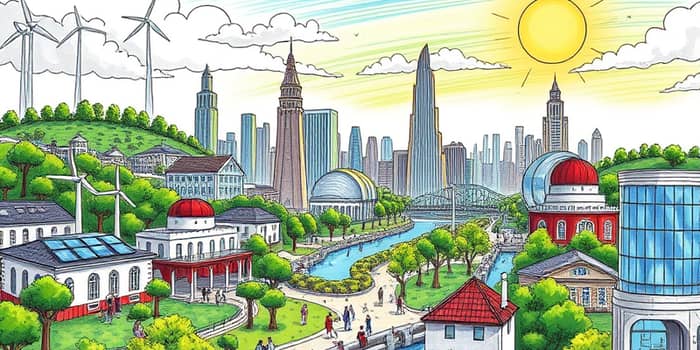
In an era defined by rapid change, our cities stand at the crossroads of survival and prosperity.
Urban resilience is the capacity to survive, adapt, and thrive amid chronic stresses and acute shocks.
It transcends mere recovery, enabling transformation through integrated efforts.
This concept is driven by megatrends that shape our world.
Climate change, urbanization, and globalization are pushing urban centers to evolve or face collapse.
Imagine a city that not only withstands a flood but emerges stronger, with greener spaces and smarter systems.
This is the promise of resilience—a future where communities flourish against all odds.
Building a resilient city requires a holistic approach anchored in key pillars.
These elements work together to create systems that are robust and adaptable.
A table can help visualize how these pillars interconnect to build resilience.
Each pillar contributes to what experts call resilience dividends, reducing impacts on people and economy.
This integrated framework is essential for thriving in uncertain times.
Cities face a myriad of threats that test their resilience daily.
Natural disasters, such as floods and earthquakes, are becoming more frequent.
By the 2080s, some regions may see a 90% increase in highest-risk properties from flooding.
Man-made challenges, like economic downturns and supply-chain disruptions, add to the complexity.
Vulnerabilities often hit marginalized groups hardest, making equity a critical focus.
Proactive planning is not just an option but a necessity for survival.
Real-world examples show that resilience is achievable and transformative.
Rotterdam in the Netherlands has pioneered water squares and green roofs for flood management.
These innovations blend functionality with public art, enhancing livability for residents.
Medellín, Colombia, transformed from a city of violence to one of resilience.
Through public transport like cable cars and participatory budgeting, it fostered social equity.
These stories prove that integrated, forward-looking strategies can turn challenges into opportunities.
They inspire hope and provide blueprints for others to follow.
Numerous tools exist to help cities build and measure their resilience.
The UN-Habitat City Resilience Profiling Tool produces detailed action plans for implementation.
Rockefeller's City Resilience Index identifies weaknesses and guides investments.
Using these frameworks, cities can diagnose issues and monitor progress effectively.
They empower communities to take charge of their future with confidence.
Investing in urban resilience yields significant benefits beyond mere survival.
Proactive strategies attract businesses and spur innovation through technology and sustainability.
Reduced recovery time and costs make cities more competitive and livable.
Economic growth is bolstered by diverse industries and resilient infrastructure.
Quality of life improves with green spaces and equitable access to services.
This holistic imperative ensures that cities are designed for disruption, not just normal conditions.
It's a path to thriving amid the megatrends shaping our world.
Everyone has a part to play in fostering urban resilience.
From community workshops to supporting local businesses, small actions add up.
Advocate for policies that prioritize inclusive and risk-aware planning in your city.
Engage in volunteer programs or use technology to stay informed during crises.
By working together, we can build cities that are not only future-proof but also vibrant and just.
Embrace this journey with optimism and determination.
References