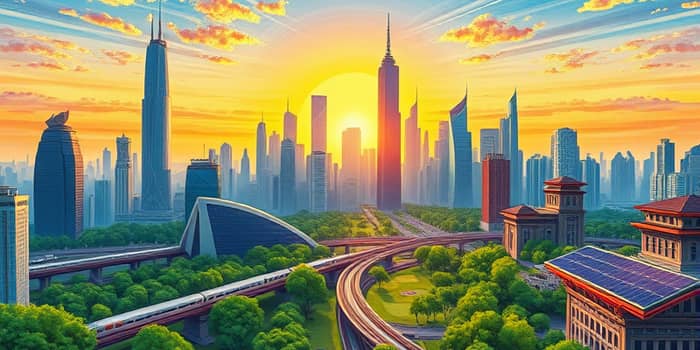
The world is witnessing an unprecedented urban revolution, with megacities becoming the beating hearts of global progress and human potential.
These sprawling metropolises, each housing over 10 million people, are not just population centers but hubs of innovation, culture, and economic dynamism.
Investing in megacity growth and infrastructure development offers a pathway to shape a sustainable and prosperous future for billions.
As urbanization accelerates, understanding the scale and implications of this transformation is essential for investors, planners, and citizens alike.
This article delves into the current landscape, future projections, and practical insights to guide strategic decisions in this evolving arena.
Megacities are defined as urban areas with at least 10 million inhabitants, representing a dramatic shift in how humanity clusters and thrives.
Since 1975, the number of megacities has quadrupled from eight to 33 as of 2025, highlighting a rapid global urbanization trend.
Approximately 45% of the world's population now resides in cities, with this figure expected to rise steadily in the coming decades.
This concentration drives economic activity but also poses significant challenges in terms of resource management and social equity.
Asia leads the way with 19 of the 33 megacities, underscoring the region's pivotal role in urban growth.
Latin America and Africa follow with five and four megacities respectively, indicating diverse geographic spread.
However, it's important to note that most urban dwellers actually live in smaller cities, which have more than doubled in number since 1975.
This duality of scale makes urban planning a complex yet rewarding endeavor for stakeholders worldwide.
The global urban hierarchy is constantly evolving, with cities jockeying for position based on population size and economic influence.
Jakarta has recently overtaken Tokyo as the world's largest city, with a population of around 42 million, symbolizing Asia's urban ascendancy.
This shift reflects broader demographic trends and the relentless pace of development in emerging economies.
Below is a table showcasing the top five megacities by population in 2025, providing a snapshot of current urban giants.
Tokyo-Yokohama remains the largest urban agglomeration overall at 37 million, highlighting the enduring importance of established hubs.
These cities serve as benchmarks for urban scale and the immense potential for investment in infrastructure and services.
Looking ahead, the number of megacities is projected to grow to 37 by 2050, with Dhaka expected to become the world's most populous city at 51.1 million residents.
This growth underscores the need for proactive planning and substantial capital infusion to support expanding populations.
Several emerging cities are poised to join the megacity ranks, reflecting shifting global dynamics.
Notably, some major cities are experiencing population declines, with over one-third of shrinking cities located in China and 17% in India.
This trend adds complexity to investment strategies, requiring a nuanced approach to urban development.
Long-term projections through 2100 show significant population concentration in African cities, such as Lagos and Kinshasa.
These forecasts highlight the importance of adaptive and resilient urban frameworks to accommodate future shifts.
Meeting the needs of growing megacities demands massive infrastructure investment, estimated at $106 trillion cumulatively through 2040 across key sectors.
This investment is crucial for enhancing livability, economic competitiveness, and environmental sustainability in urban areas.
Breakdown of global infrastructure needs reveals prioritized sectors where capital can drive transformative impact.
In the U.S., megaproject costs are estimated to soar from $50 billion in 2019 to $350 billion by 2029, indicating a surge in domestic urban investment.
Globally, 50 megacities had infrastructure projects worth over $5.3 trillion in the pipeline as of 2019, with leaders including London, Dubai, and New York City.
For instance, New York City plans $285.2 billion in overhauls, such as airport upgrades and climate resilience measures.
This scale of investment underscores the critical role of public-private partnerships in financing urban transformations.
Developing new cities or retrofitting existing ones involves significant costs, influenced by factors like density, land conditions, and infrastructure type.
AECOM's Cities Cost Model identifies key cost components for urban developments, ranging from 50,000 to 2 million people.
Costs vary widely based on whether development occurs on brownfield or greenfield sites, with older cities often facing higher maintenance expenses.
Per-foot infrastructure maintenance in urban cores can be 5-10 times higher than in new suburbs, but tax bases are 50-100 times higher, justifying the investment.
A case study of a planned capital project shows an estimated cost of $8.1 billion, with 40% of the area dedicated to green spaces.
Such projects typically take over a decade to become viable, emphasizing the long-term nature of urban investments.
Urban expansion is fastest in smaller cities, particularly in Africa and Asia, which are growing more rapidly than larger metropolitan areas.
This pattern suggests opportunities for investment in emerging urban centers before they reach megacity status.
Aging infrastructure in established cities requires strategic renewal and modernization efforts to maintain competitiveness and livability.
Population projections beyond 2050 indicate a shift towards African dominance, with cities like Lagos and Kinshasa expected to swell to over 80 million each.
This demographic shift will reshape global economic landscapes and necessitate tailored investment approaches.
Investors should consider both the challenges of shrinking cities and the opportunities in growing ones to diversify and mitigate risks.
To navigate the complexities of megacity growth, stakeholders can focus on several core themes that drive successful urban transformations.
These themes provide a framework for making informed decisions that align with global trends and local contexts.
By embracing innovation and collaboration, investors can contribute to sustainable and inclusive urban futures.
The journey of urban transformation is ongoing, offering endless possibilities for those ready to engage with the dynamics of megacity growth.
References