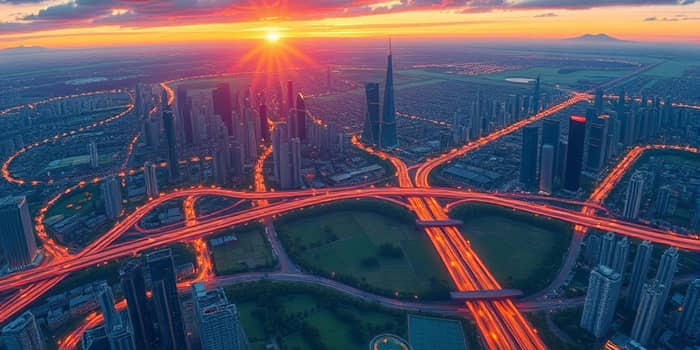
Urbanization is reshaping the global landscape at an unprecedented pace. From coastal megacities to inland towns, the shift towards urban living is redefining social structures, economic opportunities, and environmental dynamics. As populations flock to metropolitan centers, investors and policymakers must anticipate the evolving demands for infrastructure, housing, and services. This article delivers an in-depth analysis of profound urban trends, highlighting both the remarkable potential of mega-cities and the overlooked promise of smaller urban centers.
By the mid-2020s, the world population reached approximately 8.2 billion, with over 45% of people living in cities and 36% in towns, leaving less than one-fifth in rural areas. This global shift marks a dramatic departure from 1950, when only 20% resided in cities and 40% in towns. Projections indicate that by 2050, urban dwellers will account for nearly 70% of humanity—around 7 billion out of an estimated 9.8 billion.
Urban expansion has consistently outpaced demographic growth. Since 1975, built-up land increased nearly twice as fast as population, driving per capita land consumption from ~43 m² to ~63 m². This trend underscores the transformation of constructed areas and the pressing need for sustainable land-use policies.
The United Nations defines mega-cities as urban areas with at least 10 million inhabitants. From 8 mega-cities in 1975, the world saw this figure quadruple to 33 by 2025, with Asia accounting for 19. Growth is expected to continue, reaching around 37 by mid-century. Cities such as Jakarta and Dhaka are at the forefront, while established giants like Tokyo and New York adapt to demographic shifts.
Population projections suggest Dhaka will surpass all other cities by mid-century, while Tokyo may drop to seventh place. Meanwhile, emerging mega-cities such as Addis Ababa and Kuala Lumpur will diversify the global urban landscape. Yet mega-cities capture only part of the story: out of roughly 12,000 cities with over 50,000 inhabitants, 96% have fewer than one million residents, and 81% below 250,000.
These small and mid-sized urban centers often outpace growth rates seen in mature mega-cities, especially in sub-Saharan Africa and South Asia. Understanding this duality is essential for crafting investment strategies, as harnessing demographic dividends in small cities can yield significant returns and social impact.
Urban areas must adapt to accommodate increasing densities while curbing sprawl. The rising built-up land per person highlights inefficiencies in settlement patterns and the urgent need for compact, mixed-use development. Smart growth strategies—such as infill development and transit-oriented design—can alleviate pressures on land and natural resources.
Infrastructure demands are equally pressing. Cities must expand infrastructure and services in transport, energy, water, and sanitation to sustain rising populations. At the same time, urban planners face the challenge of upgrading legacy systems in cities experiencing population decline, ensuring that investments remain cost-effective over the long term.
Climate resilience adds another dimension. Coastal mega-cities confront sea-level rise and extreme weather events, whereas inland cities grapple with water scarcity and heat stress. Integrating green infrastructure—urban wetlands, green roofs, and permeable surfaces—can mitigate risks and enhance livability. Investors and policymakers must collaborate to design adaptive solutions that blend engineering, nature-based approaches, and technology.
Urbanization unlocks a spectrum of investment opportunities across sectors, each aligned with core urban needs and sustainability imperatives. Key themes include:
Investors should also consider diversified risk-return profiles in cities, balancing exposure to fast-growing secondary markets with stable, well-regulated mega-cities. Blended finance mechanisms and impact funds can align profit motives with social and environmental objectives.
While mega-cities offer scale and visibility, they also present high entry costs, complex governance, and intense competition. In contrast, secondary and tertiary cities often feature lower valuations and favorable demographic trends. By investing in late-urbanizing, infrastructure-deficit regions, stakeholders can tap into underserved opportunities and support local development agendas.
Effective investment strategies hinge on granular data and cross-sector partnerships. Collaboration between government agencies, community organizations, and private enterprises fosters shared risk management and enhances project viability. Adhering to Environmental, Social, and Governance standards ensures that growth benefits neighborhoods equitably, minimizing displacement and enhancing resilience.
Ultimately, urbanization defines the trajectory of the 21st century. The interplay between mega-cities and smaller urban centers offers a dynamic landscape of challenges and prospects. Through strategic foresight, innovative financing, and inclusive planning, investors can drive transformative change, shaping cities that are vibrant, sustainable, and resilient for generations to come.
References