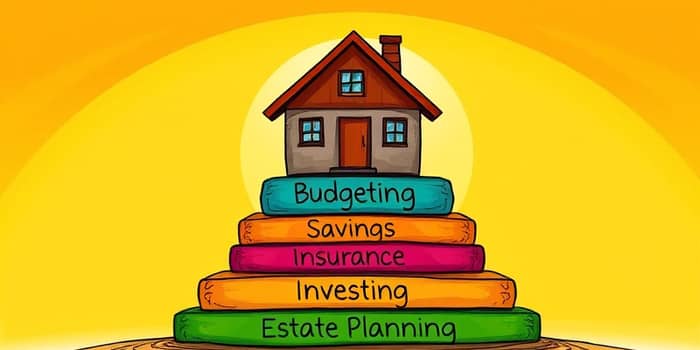
Building personal wealth is much like constructing a house: the visible roof and walls represent your goals and aspirations, but everything rests upon an unseen foundation. Without that base, no structure can endure storms or the test of time. In finance, this foundation is the sum of your habits, protections, and systems that deliver financial freedom and control and allow you to thrive.
By understanding what makes a financial foundation strong—and then designing it deliberately—you gain peace of mind and security, weather life’s unexpected challenges, and open doors to opportunity. This guide explains why a solid base matters, outlines its core components, and offers practical steps to craft your own resilient financial plan.
At the heart of a stable financial life are four pillars: stability, resilience, opportunity, and psychological well-being. Each speaks to how you live today and what you can achieve tomorrow.
First, stability comes from breaking free of the paycheck-to-paycheck cycle. An intentional buffer of savings and disciplined budgeting lets you stop living paycheck to paycheck and start directing funds toward meaningful goals instead of covering emergencies.
Second, resilience is your ability to withstand shocks—job loss, medical bills, or unexpected repairs—without derailing your progress. A robust emergency fund and proper insurance act as a safety net against uncertainties, preventing high-interest debt or asset liquidation when times get tough.
Third, opportunity follows preparedness. When your foundation is solid, you can seize investment openings, negotiate favorable loan terms for a home purchase, or pivot careers with confidence. In business, this translates to accurate forecasting and cash-flow management that attract investors and fuel growth.
Finally, strong foundations deliver psychological benefits. Knowing you have a plan and buffer alleviates money stress, fostering a sense of long-term financial growth goals and allowing you to focus on what truly matters.
Think of each building block as a designed element of your financial blueprint. Every block rests on the one beneath it; weakness in one area constrains everything above. Let’s explore these elements in order from the ground up.
Your budget is the architectural plan for your money flow. It outlines how every dollar enters and leaves your hands, ensuring you allocate resources with intention. Like any blueprint, a clear, accurate design prevents costly mistakes during construction.
A popular framework splits net income into three categories:
To get started, review recent bank and card statements, categorize expenses into these buckets, and compare actual spending to your ideal targets. This diagnostic step reveals opportunities to reassign funds and build wealth step by step.
An emergency fund of three to six months of living expenses is the cornerstone of financial resilience. It prevents reliance on high-interest credit cards or loans when crisis strikes. Keep these funds in a liquid, accessible account—such as a high-yield savings or money market account—so you can deploy them instantly without penalty.
Automate transfers each payday into a separate account dedicated to emergencies. Automation turns intention into habit and ensures you make consistent progress over time.
Debt can be both constructive and destructive. Mortgages or student loans tied to long-term assets may support your goals, but high-interest consumer debts erode your capacity to save and invest. The first step is to list every debt with its balance and interest rate.
Choose the strategy that fits your personality:
Whichever path you select, adjust your budget to free extra cash for accelerated repayment. Simultaneously, monitor and improve your credit score—this vital metric determines your access to favorable interest rates on future loans.
Insurance shields your foundation from catastrophic events that could otherwise wipe out years of progress. Essential policies include:
Combined with your emergency fund, these protections form a layered defense. Taking the time to assess policies, compare quotes, and adjust coverage ensures your safety net stays reliable.
Once debts are managed and protections are in place, turning surplus cash into growth is your next objective. Savings accounts are ideal for short-term goals, but to outpace inflation and build lasting wealth, you need to invest.
Investment categories range from ownership stakes—stocks, equity mutual funds—to fixed-income assets like bonds. Diversification through mutual funds or ETFs helps spread risk, while tax-advantaged retirement accounts boost compound growth.
Embrace dollar-cost averaging by contributing steadily regardless of market conditions. This approach smooths out volatility and encourages automated savings and investing discipline that pays dividends over decades.
Designating a portion of every paycheck for retirement is non-negotiable if you want to retire with dignity. Labeling contributions as support for “Future You” reframes saving as a gift to yourself rather than a sacrifice.
Whether through employer-sponsored plans or individual retirement accounts, aim to maximize any employer match and gradually increase contributions until you’re on track for your target retirement lifestyle.
Beyond monthly cash-flow monitoring, track your net worth—assets minus liabilities—on a quarterly basis. This holistic view captures equity growth in real estate, retirement balances, and investments while subtracting debts. A steadily rising net worth is the ultimate proof your efforts are working.
Even if you’re not ultra-wealthy, estate planning ensures your wishes are honored and loved ones avoid needless legal obstacles. A basic plan includes a will, beneficiary designations on financial accounts, and guardianship decisions for minors.
For those seeking advanced control, trusts can manage asset distribution, mitigate tax burdens, and guard against unforeseen disputes. Addressing these matters today preserves your legacy and provides solace knowing clarity of your financial situation endures beyond your lifetime.
With these components in place, you’re no longer at the mercy of chance. Instead, you’ve deliberately designed a foundation that supports a thriving life, free from constant financial worry and equipped to seize every opportunity.
Begin now. Draft your blueprint. Lay each block with intention. And watch as your financial house, built on a rock-solid foundation, stands unwavering through every season of life.
References