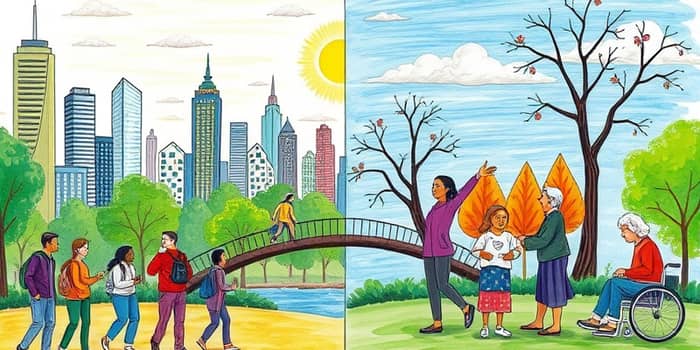
The world stands at a demographic crossroads, facing a profound transformation that reshapes our future.
In the United States, the population aged 65 and older surged by 13% from 2020 to 2024, signaling a rapid aging trend.
Simultaneously, those under 18 declined by 1.7% during the same period, highlighting contrasting societal pressures.
This shift marks a critical turning point, where in some states, older adults now outnumber children, demanding urgent attention.
Understanding these changes is key to fostering innovation and resilience in our communities.
The median age in the U.S. reached 39.1 years in 2024, up from 38.5 in 2020, indicating an older populace.
By 2025, age distribution shows youth (0-14) at 17.1%, working-age (15-64) at 64.5%, and elderly (65+) at 18.4%.
This trend is driven by baby boomers transitioning into retirement, the primary driver of the aging demographic shift.
Key states like Maine and Florida already have more older adults than children, with such states rising from three to eleven since 2020.
Future projections are stark, with Americans ages 65+ set to increase from 58 million in 2022 to 82 million by 2050.
This represents a 42% increase that will strain social systems and resources.
Dependency ratios are crucial, with 2.7 working-age people per elderly person now, projected to drop to 2.2 to 1 in three decades.
The older age dependency ratio will surpass youths in 2026, a milestone requiring proactive policy.
Globally, by 2050, one in six people will be over 65, with 16.4% aged 65+.
The global elderly population is set to double from 730 million to 1.5 billion by 2050.
Life expectancy rose from 46 years in 1950 to 74 in 2025, fueling this trend.
This global shift means societies must adapt to maintain economic and social vitality.
Healthcare systems face unprecedented demands for geriatric care, with specialized needs increasing.
Long-term care infrastructure is often under-resourced, with a workforce too small for growing demands.
Expenditure on the elderly may rise from $1.2 trillion to $2.5 trillion by 2050, a massive financial burden.
Designing walkable communities ensures older adults can access essentials, promoting mobility and well-being.
Aging populations raise fiscal pressures on pensions, exacerbated by lower birth rates and longer lives.
The old-age dependency ratio may increase from 12.3% to 25.4% by 2050, indicating growing economic strain.
Immigration helps temporarily, but policy shifts are essential for long-term stability.
Deaths may exceed births by 2040, further complicating demographic dynamics.
Proactive measures are vital to address both aging and youth-focused challenges.
Research shows America is not ready for its growing older population, with infrastructure and policy gaps.
For individuals, embracing lifelong learning and community engagement fosters adaptation.
Practical steps include planning for retirement savings and supporting local initiatives.
By fostering innovation, we can turn challenges into opportunities for a resilient society.
Thoughtful action ensures both youth and aging populations thrive, creating harmony for decades to come.
References