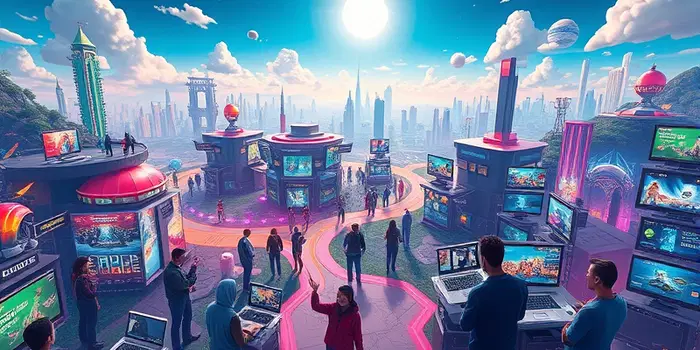
The metaverse economy is emerging as one of the most dynamic frontiers of the digital age, poised to reshape how we work, play, and connect. From immersive gaming realms to virtual shopping districts, this ecosystem blurs the boundaries between physical and digital experiences. As we explore its trajectory, we witness exponential growth with diverse forecast ranges that span hundreds of billions to multiple trillions of dollars by 2030.
In this article, we examine three key pillars driving this transformation: (1) market size and growth forecasts, (2) virtual business models and major platforms, and (3) the tangible economic, social, and regulatory impact. By weaving data, case studies, and practical insights, we aim to inspire readers to embrace the possibilities and navigate the complexities of tomorrow’s virtual marketplace.
Analysts on both sides of the debate agree that the metaverse is expanding at an unprecedented pace, even if their estimates diverge. Mordor Intelligence projects a rise from USD 165.57 billion in 2025 to USD 950.23 billion by 2030, implying a CAGR of 41.83%. Grand View Research forecasts USD 936.57 billion by 2030 at a 46.4% CAGR, while The Business Research Company foresees nearly USD 1.86 trillion in that year with a 42.6% CAGR. Other studies span from USD 155 billion to USD 4.5 trillion by 2030, highlighting methodological differences and varying sector scopes.
These projections underscore both the uncertainty inherent in nascent markets and the boundless optimism fueling investments in AR, VR, AI, and blockchain technologies. Sector definitions vary—some analyses include hardware and infrastructure, others focus solely on software and services—yet all anticipate a transformative shift in global digital expenditure.
Breaking the metaverse economy into its major segments reveals gaming and virtual commerce as the primary drivers. A World Economic Forum and Statista study suggests that by 2030, approximately 15% of the global digital economy will be rooted in metaverse-like environments, with gaming and e-commerce leading the charge.
This segmentation highlights how entertainment, commerce, and productivity converge in shared virtual spaces, creating multifaceted revenue streams and opportunities for innovation.
Leading platforms exemplify the metaverse vision through scale, innovation, and creator-driven economies. Roblox, for instance, reported 151.5 million daily active users in Q3 2025—a 70% increase year-on-year—and quarterly revenue of USD 1.36 billion, up 48% from the previous year. Its model, based on user-generated content platforms and virtual economies, allows creators to earn Robux, which can be converted into real money, democratizing digital entrepreneurship.
Fortnite extends gaming into a broader entertainment ecosystem. With hundreds of millions of monthly active users, Epic Games has transformed the title into a venue for live concerts, interactive storytelling, and cross-platform avatars. This immersive social platforms and branded events approach generates new revenue channels beyond traditional gameplay.
Minecraft, a pioneer in open-world building, demonstrates the complexities of maintaining full XR integration. After its March 2025 update, VR and MR support ceased further development, reflecting the technical challenges of immersive adoption and the varied ROI for hardware investments across platforms.
Meta’s Horizon Worlds illustrates the struggle for mainstream traction. Despite Facebook’s vast user base, Horizon Worlds reported fewer than 200,000 monthly active users on headsets. However, the recent expansion to mobile and web quadrupled its audience in a year, spotlighting the importance of cross-platform interoperability and continuity to overcome hardware barriers.
In Asia, ZEPETO stands out with over 400 million registered users and 20 million monthly actives. Its avatar customization, branded virtual items, and social mini-games showcase how fashion and identity drive engagement, offering a rich canvas for brand activations and community-building.
The metaverse economy thrives on diverse monetization strategies that cater to both consumers and creators. Core consumer-facing models include:
At the heart of this ecosystem is the creator economy and digital entrepreneurship opportunities enabled by no-code tools, SDKs, and revenue-sharing models. Platforms like Roblox distribute a percentage of user spend to developers, empowering indie creators to monetize innovative experiences. Meanwhile, marketplaces for 3D assets, avatar fashion, and animations fuel a vibrant design economy, as studios and freelance artists license digital goods across multiple worlds.
The metaverse holds profound implications for economic inclusion and cultural exchange. By fostering economic inclusion through decentralized participation, individuals from diverse backgrounds can access global markets, develop new skills, and generate income. Educational institutions are piloting virtual classrooms, while healthcare providers explore VR therapy for patient treatment and rehabilitation.
Tourism and retail industries are experimenting with virtual showrooms and immersive excursions, driving cost efficiencies and novel customer experiences. As digital and physical worlds intertwine, businesses must assess supply chains, data security, and workforce training to harness these innovations responsibly.
Yet, with innovation comes regulation. Data privacy, intellectual property rights, and digital asset custody raise complex legal questions. Governments and standards bodies are convening to address taxation, anti-money laundering measures, and user safety protocols. Collaboration between policymakers and industry pioneers will be essential to establish frameworks that balance growth with consumer protection.
Looking ahead, the metaverse economy beckons a new era of creative expression, social interaction, and economic opportunity. By aligning technological innovation with ethical guidelines and inclusive practices, stakeholders can ensure that virtual frontiers deliver real-world benefits for industries and communities worldwide.
As entrepreneurs, creators, and regulators navigate this expansive terrain, one principle remains clear: the metaverse’s ultimate value lies in its ability to unite human ingenuity with digital possibility. The journey has just begun, and its impact will resonate far beyond the confines of any single platform or forecast.
References