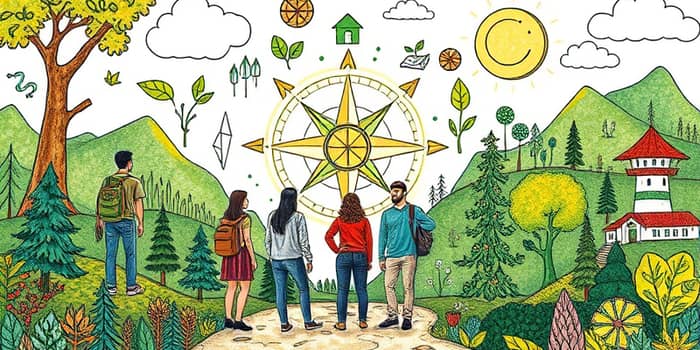
In a world where every purchase carries weight, understanding the ripple effects of our choices has never been more crucial. This guide illuminates the journey of conscious consumerism, offering both inspiration and practical tools to align spending with deeply held values.
Whether you are just beginning to question the origins of your coffee or you seek to overhaul your lifestyle entirely, this article will serve as your compass, pointing toward purposeful decisions that support people, planet, and prosperity.
Conscious consumerism emerged from grassroots movements championing environmental stewardship and fair labor. Over the past decade, it has evolved into a mainstream force, driven by citizens demanding accountability and corporations responding to public scrutiny.
Modern shoppers examine brands through a holistic lens, focusing on social, environmental, ethical impacts across the entire product lifecycle. They leverage reviews, certifications, and open data to form opinions, creating a powerful feedback loop that rewards genuine efforts and punishes empty promises.
Looking forward, the movement will be defined by experience-driven discovery via platforms and by consumer insistence on identity-aligned choices. Ethical data transparency will become the default, as shoppers refuse to settle for any purchase lacking verifiable impact information.
Industry data underscores that conscious consumerism is more than an ethical fad; it is reshaping global commerce. North American consumers now allocate 40 percent of their spend to values-driven products, a figure steadily climbing in both the United States and Canada.
In the U.S., 207 million adults made eco-friendly purchases in 2024, generating $230 billion in sales in 2025. Analysts forecast this segment will balloon to $544 billion by 2032, capturing over one-third of total retail spend. This translates into rapid growth in eco-friendly spending—173 percent faster than conventional alternatives.
Global trends mirror North American momentum. Sustainable products command 17 percent of worldwide market share, growing at 2.7 times the pace of standard goods, with 75 percent of these items selling better online. The consumer packaged goods sector exemplifies this shift: while sustainability-marketed items make up only 16.1 percent of offerings, they drive 54.7 percent of category growth.
One of the most persistent myths is that conscious consumers are a privileged elite. Research dispels this notion: no direct link exists between income and ethical purchasing. In fact, the group most engaged—known as Sustainability Stewards—reports twice the price sensitivity of less engaged shoppers.
Political affiliation also plays a surprisingly minor role. While slightly more Democrats than Republicans report values-driven habits, the desire for ethical choices crosses party lines, uniting people around shared human and environmental concerns.
Generational insights reveal that Gen Z leads with purpose: over half prioritize sustainability over brand names, and two-thirds will pay up to 48 percent more for cause-driven products. Millennials follow closely, with more than 70 percent weighing environmental factors in daily shopping. Even Gen X stays invested, with 60 percent actively choosing healthy, sustainable options.
People pursue conscious consumerism for multifaceted reasons: a desire to combat climate change, reduce waste, protect animal welfare, and build healthier communities. These overarching goals translate into practical habits that shape everyday life.
Since 2021, sustainable behaviors have surged:
The willingness to pay a premium underscores deep commitment: globally, 80 percent of consumers will spend more on eco-friendly brands, with an average premium of 26.6 percent in 2024. Health-conscious choices overlap strongly, as individuals link environmental well-being to personal and community health.
Despite strong motivation, many consumers encounter obstacles that dampen their resolve. Confusing labels and unverified claims cause half of shoppers to abandon otherwise conscious purchases. Greenwashing scandals amplify distrust, with 75 percent of buyers skeptical of corporate sustainability communications.
To bridge the gap, brands must embrace radical transparency. Sharing detailed sourcing data, third-party audits, and impact metrics fosters credibility. By aligning actions with words, companies can convert skeptics into advocates and create lasting loyalty.
The future of conscious consumerism rests on the shoulders of businesses willing to innovate with authenticity. The most effective messaging leverages a Me Now, We Later framework, combining immediate human benefits—like wellness and community health—with long-term ecological gains.
Consumers crave stories they can live. By emphasizing human-centered communication beats abstract narratives and demonstrating how purchases enrich daily life, brands can build emotional connections that transcend transactional relationships.
As ESG funds edge towards $50 trillion and sustainable products continue to outperform, companies ignoring this cultural shift risk obsolescence. The path forward demands collaboration: partnerships with local communities, investment in renewable systems, and deployment of immersive experiences that transform shopping into a purposeful adventure.
Ultimately, consumers will gravitate toward brands that deliver practical, personal, everyday benefits of sustainability. By making ethical choices seamless, rewarding, and aligned with personal identity, we empower a future where every purchase points in the right direction.
References